

A quick meal does not have to rely on heavily processed ingredients or leave nutrition as an afterthought. Meals built around vegetables, fruits, whole grains, beans, fish, nuts, seeds, and healthy oils fit well within eating patterns associated with lower inflammation. Fortunately, several meal ideas are designed for busy days when you want something simple, filling, and built around ingredients that support an anti-inflammatory style of eating.
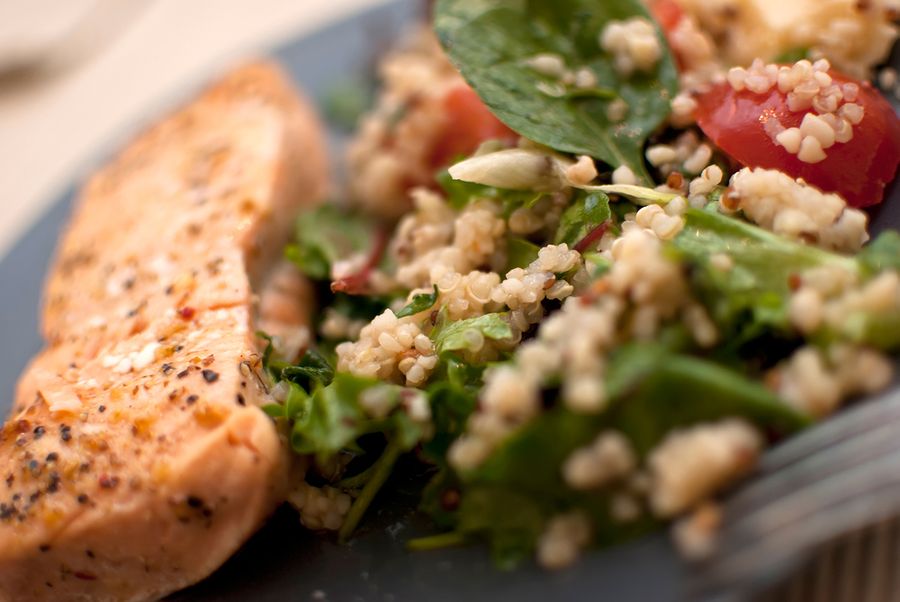
1. Salmon and Quinoa Bowl
Start with cooked quinoa and add salmon, spinach, cucumber, cherry tomatoes, and a drizzle of olive oil with lemon juice. Leftover cooked salmon works well, or you can prepare a small fillet while the quinoa cooks. Using precooked or frozen quinoa can make the meal even faster.
Salmon supplies EPA and DHA, two important omega-3 fatty acids found primarily in fish and seafood. Omega-3 fatty acids are involved in signaling pathways that influence inflammatory activity in the body. Pairing salmon with vegetables, whole grains, and olive oil also mirrors the general structure of a Mediterranean-style meal.
2. Berry, Oat, and Yogurt Bowl
For a meal that works particularly well at breakfast or lunch, combine plain Greek yogurt with rolled oats, blueberries or strawberries, chopped walnuts, and a small amount of cinnamon. Overnight oats can be prepared in advance, while quick-cooking oats make it easy to assemble the bowl shortly before eating.
Berries contain plant compounds called polyphenols, including anthocyanins in many red, blue, and purple varieties. Fruits, whole grains, nuts, and seeds are all commonly included in anti-inflammatory eating patterns. Choosing unsweetened yogurt and limiting added sugar keeps the focus on whole or minimally processed ingredients.
3. Lentil, Tomato, and Spinach Soup
A fast lentil soup can come together with canned lentils, no-salt-added or lower-sodium diced tomatoes, vegetable or chicken broth, spinach, garlic, and dried herbs. Because canned lentils are already cooked, they only need to be heated through with the other ingredients.
Beans and lentils provide fiber and plant-based protein, while tomatoes and spinach add vegetables without requiring lengthy preparation. Legumes, vegetables, and whole grains are central components of Mediterranean-style eating patterns, which emphasize minimally processed plant foods. Make a larger batch and refrigerate individual portions for quick meals later in the week.
4. Avocado and White Bean Toast
Mash canned white beans with avocado, lemon juice, black pepper, and a little olive oil, then spread the mixture over whole-grain toast. Top it with sliced tomato, arugula, or another leafy green for additional texture and flavor.
This combination provides fiber from both the beans and whole grains, along with unsaturated fats from avocado and olive oil. Fiber-rich foods such as legumes and whole grains are frequently included in anti-inflammatory dietary patterns. Rinsing canned beans before using them can also reduce some of the sodium from the packing liquid.
5. Chicken and Vegetable Sheet-Pan Dinner
For an easy dinner with minimal cleanup, place bite-size pieces of chicken on a sheet pan with vegetables such as broccoli, bell peppers, zucchini, and red onion. Toss everything lightly with olive oil, garlic, pepper, and herbs before roasting until the chicken is safely cooked and the vegetables are tender.
Serve the mixture with brown rice, farro, or another whole grain if you want a more substantial meal. A dietary pattern centered on vegetables, whole grains, poultry, fish, beans, nuts, and plant oils fits closely with established heart-healthy and anti-inflammatory eating approaches.
Preparing extra vegetables at the same time can also make the next day's lunch easier. The leftovers can be added to a grain bowl, stuffed into a whole-grain pita, or served over greens.
6. Berry, Spinach, and Flax Smoothie
A smoothie can work as a quick breakfast or light meal when solid-food preparation feels inconvenient. Blend frozen berries, spinach, plain yogurt or an unsweetened milk alternative, ground flaxseed, and enough liquid to reach the texture you prefer.
Berries provide polyphenols, while flaxseed is a plant source of alpha-linolenic acid, or ALA, an omega-3 fatty acid. Using whole fruit rather than juice also preserves more of the fruit's fiber. For additional staying power, consider adding oats, nut butter, or plain Greek yogurt rather than relying on sweetened protein mixes.
Keep the Overall Eating Pattern in Mind
No single salmon bowl, smoothie, or serving of berries can eliminate chronic inflammation on its own. The broader dietary pattern matters more than any individual so-called superfood. Eating styles associated with lower inflammation tend to emphasize fruits, vegetables, whole grains, legumes, fish, nuts, seeds, and healthy plant oils while limiting heavily processed foods, refined carbohydrates, and processed meats.
That makes quick meals easier to approach. Instead of searching for unusual ingredients, build meals from familiar whole foods that can be prepared efficiently. Keeping frozen vegetables and berries, canned beans, whole grains, eggs, fish, leafy greens, and healthy fats available can make an anti-inflammatory eating pattern much easier to maintain on busy days.