

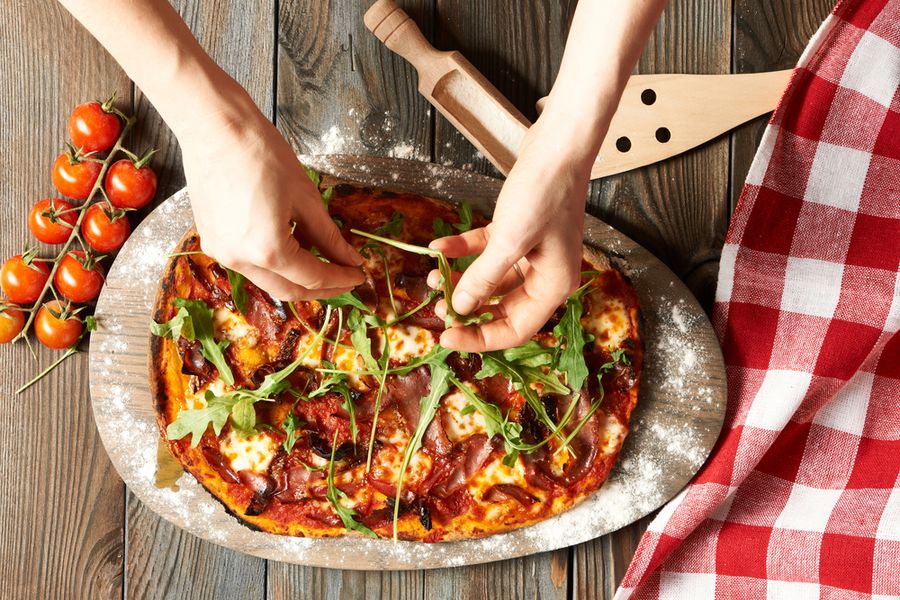
Homemade pizza can turn out crisp, flavorful, and well browned even without a dedicated pizza oven or collection of specialty tools. A standard oven, sheet pan, mixing bowl, and a few basic techniques can take you surprisingly far. The biggest improvements usually come from handling the dough carefully, using enough heat, keeping toppings under control, and choosing the right baking surface. With a little planning, ordinary kitchen equipment can produce much better pizza.
Give the Dough Time to Rest
Pizza dough becomes easier to stretch when it has had enough time to relax. If the dough repeatedly springs back while you are shaping it, cover it and leave it alone for several minutes before trying again. Resting allows the dough to become more cooperative and reduces the temptation to force it into shape.
You also do not need a perfectly round crust. An oval or rustic shape will bake just as well. For thinner pizza, dough can be rolled or stretched quite thin, while thicker pan-style pizza benefits from additional rising time before baking.
Use a Sheet Pan More Strategically
A basic sheet pan is enough to bake good pizza, especially if you adjust the style to suit the equipment. One easy approach is to press the dough directly into a lightly oiled rimmed pan and make a thicker sheet-pan pizza. The sides of the pan help contain the dough and toppings, so transferring the uncooked pizza is simple.
For a thinner crust, preheating a metal half-sheet pan can improve the underside because the hot metal begins transferring heat to the dough immediately. A sheet pan cannot hold as much heat as a pizza stone or steel, but preheating it gives it a better chance of browning the bottom before the toppings overcook.
Heat the Oven Thoroughly
Pizza benefits from strong heat. Instead of putting the pizza into the oven as soon as the preheat indicator turns off, give the oven and any baking surface enough time to become thoroughly hot.
Use the temperature specified by your recipe, and position the rack with the desired crust in mind. Baking toward the lower part of the oven can help encourage bottom browning, while briefly moving an almost-finished pizza higher can help color the cheese and crust. If your recipe permits broiling at the end, watch closely because the surface can brown very quickly.
A baking stone or steel can improve crust browning if you happen to own one, but it is not required. A preheated sheet pan remains a workable substitute for basic homemade pizza.
Keep Sauce and Toppings Under Control
One of the easiest ways to sabotage homemade pizza is to overload it. Too much sauce, cheese, or moisture-heavy topping can leave the center soft while the outside of the crust finishes cooking.
Spread sauce in a relatively thin layer and distribute toppings rather than piling them in the middle. Wet ingredients such as mushrooms, fresh mozzarella, or certain vegetables may benefit from draining or partial cooking before they go on the pizza. Cooked vegetables are commonly used on sheet-pan pizza specifically because much of their moisture has already been released.
Try making one pizza with fewer toppings than you normally use. A lighter topping load often allows the crust to bake more evenly and makes each ingredient easier to taste.
Use Parchment to Make Transfers Easier
Moving soft, topped dough from a counter to a hot pan can be one of the most stressful parts of pizza making. Parchment paper provides a simple solution.
Shape the dough directly on parchment, add the toppings, and transfer the pizza with the paper underneath. If you are baking on a hot surface, the back of another baking sheet can act as an improvised peel for sliding the pizza into the oven. Parchment is specifically useful for preventing sticking and simplifying pizza transfers when a dedicated peel is unavailable.
Check the temperature limit printed on the parchment package and follow the manufacturer's instructions. If your recipe uses temperatures beyond that limit, another transfer method may be necessary.
Let a Cast-Iron Skillet Do the Heavy Lifting
If you own a cast-iron skillet, it can be an excellent tool for thicker pan pizza. The heavy metal retains heat well and can create a deeply browned bottom while supporting a thicker, softer interior.
Oil the skillet appropriately for the recipe, then press or stretch the dough into the pan. Pan pizza is particularly forgiving because you do not have to transfer a fully assembled, floppy pizza onto another baking surface. The skillet goes directly into the oven, reducing one of the trickier steps in homemade pizza making.
This style is also a good choice when your oven struggles to produce the intensely crisp bottom associated with thinner pizzeria-style pies.
Finish the Pizza After It Leaves the Oven
Not every ingredient needs to bake. Some toppings taste better when added after the pizza comes out of the oven.
Fresh basil, arugula, grated hard cheese, a small drizzle of olive oil, or chili flakes can add freshness and contrast without adding moisture during baking. Finishing ingredients are particularly useful when the base pizza is simple.
Give the pizza a short rest before cutting it as well. Slicing immediately can cause hot cheese and toppings to slide away from the crust. A brief pause allows everything to settle while the crust remains hot.
Better Technique Matters More Than Specialized Gear
Great homemade pizza is largely about using ordinary equipment intelligently. Let the dough rest when it resists shaping, heat the oven thoroughly, avoid overcrowding the crust with toppings, and use a sheet pan, parchment, or cast-iron skillet to make baking easier.
Specialty pizza tools can expand your options, but they are not a requirement for noticeable improvement. A standard oven and a few familiar kitchen tools can produce excellent results when the dough, heat, and toppings are handled with care. The more consistently you control those basics, the better your homemade pizza is likely to become.