

Choosing where to stay can shape an entire Iceland itinerary. Reykjavík offers restaurants, museums, nightlife, organized tours, and easy access to several classic day trips, while a South Coast base puts waterfalls, black-sand beaches, glaciers, and smaller communities much closer to your door. Neither option is automatically better. The right choice depends on whether you value urban convenience, independent road trips, shorter sightseeing drives, or evenings surrounded by Iceland’s dramatic landscapes.
Choose Reykjavík for Convenience and Variety
Reykjavík is usually the easier base for travelers who want flexibility without depending heavily on a rental car. The downtown area is compact and walkable, while local buses connect the center with neighborhoods, museums, geothermal pools, and other parts of the capital area.
Staying in the capital also gives you far more options once the sightseeing day ends. You can spend evenings visiting restaurants, cafés, galleries, museums, shops, and public pools instead of returning to a small town where choices may be more limited. That can be especially valuable during winter, when daylight is short and travelers may spend more waking hours indoors.
Reykjavík also works well for visitors who prefer guided excursions. Day tours regularly leave the capital for destinations including the Golden Circle and South Coast, making it possible to see major landscapes without planning routes or driving yourself.
Stay on the South Coast to Spend Less Time Backtracking
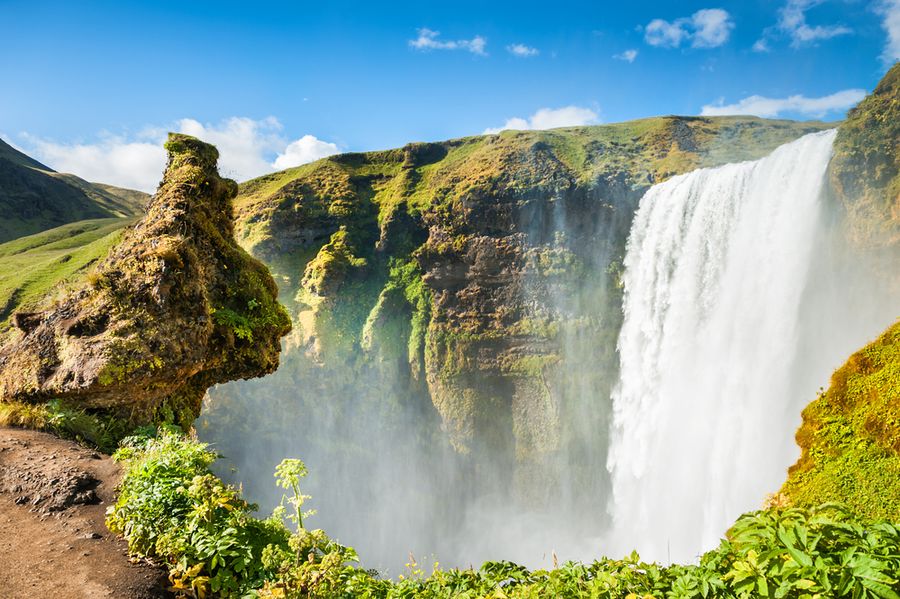
The biggest argument for basing yourself outside Reykjavík is geography. South Iceland contains Seljalandsfoss, Skógafoss, Reynisfjara, glacier scenery, coastal villages, and eventually Jökulsárlón farther east. The main South Coast route brings together waterfalls, black-sand beaches, glaciers, and communities along a single corridor.
If those landscapes are the main reason for your trip, sleeping somewhere such as Hella, Hvolsvöllur, Vík, or farther east can reduce repeated driving to and from Reykjavík. Instead of beginning and ending every South Coast day in the capital, you can continue eastward, spend more time at individual stops, and start the next morning already near the scenery you came to see.
This becomes particularly useful if Jökulsárlón or Skaftafell is on the itinerary. Jökulsárlón sits beside Route 1 in the Vatnajökull region, considerably farther along the South Coast than the better-known waterfalls near Reykjavík.
Think About Whether You Actually Want to Drive
A Reykjavík base works especially well for travelers who do not want to drive in Iceland. Guided excursions can handle transportation to major sights, while much of the capital itself can be explored on foot or by bus.
A South Coast base generally makes more sense with a rental car because attractions, accommodations, restaurants, and towns are spread along a long route. Driving gives you freedom to stop at lesser-known viewpoints, adjust your timing, and travel farther east without fitting your day around a tour schedule.
That freedom comes with responsibility. Icelandic conditions can change quickly, and roads may close with little warning, so travelers driving themselves should check current weather, road conditions, and travel alerts before setting out. The difference matters particularly outside summer, when wind, snow, ice, and limited daylight can make an ambitious driving schedule less practical.
Reykjavík Makes More Sense for a Short First Visit
For a short trip, changing hotels may consume more time than it saves. Travelers with only a few nights can often use Reykjavík as a single base and choose one or two excursions outside the city.
The Golden Circle is especially easy to combine with a capital stay. Its major stops include Þingvellir, the Geysir geothermal area, and Gullfoss, and the route is widely used for both self-drive trips and organized excursions. A separate South Coast day can then cover Seljalandsfoss, Skógafoss, Reynisfjara, and Vík.
This arrangement also leaves time for Reykjavík itself instead of treating the city purely as a place to sleep. Museums, architecture, the Old Harbour, geothermal pools, and downtown streets can comfortably occupy part of a first trip.
A South Coast Base Rewards a Nature-Focused Itinerary
Travelers who envision mornings at waterfalls, afternoons near glaciers, and evenings in small communities may find Reykjavík unnecessarily urban. Staying outside the capital keeps the trip centered on landscapes rather than repeatedly transitioning between city and countryside.
Vík is particularly useful because it sits near Reynisfjara and other coastal scenery while providing a practical stopping point on trips farther east. The surrounding region continues toward lava fields, glacier landscapes, Skaftafell, and Jökulsárlón, so changing bases can transform the South Coast from one long day trip into a slower journey.
There is also something to be said for experiencing Iceland after the tour buses begin returning west. Evenings in smaller communities can feel very different from evenings in Reykjavík, particularly for travelers who value quiet surroundings more than nightlife or extensive dining choices.
Consider Splitting the Trip Between Both
For many first-time visitors with enough nights, the strongest solution is not choosing one base exclusively. Spend the beginning or end of the trip in Reykjavík and devote several nights to the South Coast.
For example, a longer itinerary could include two nights in Reykjavík for the city and Golden Circle, followed by nights around Vík or farther east for waterfalls, beaches, glaciers, and Jökulsárlón. That structure reduces unnecessary backtracking while preserving time for the capital.
A split stay also gives you more breathing room. Rather than attempting every major South Coast attraction during one long excursion, you can stop when conditions are good, spend longer at places you enjoy, and continue east without worrying about returning to Reykjavík that evening.
Match the Base to the Trip You Actually Want
Reykjavík is the stronger base for travelers who prioritize restaurants, culture, organized tours, walkability, and minimal driving. The South Coast is better suited to travelers who want to spend most of their time among waterfalls, beaches, glaciers, and smaller communities while moving independently by car.
For a short first visit, Reykjavík often keeps logistics simplest. For a longer, nature-heavy trip, moving at least part of the stay to the South Coast can substantially reduce backtracking. And when the itinerary has enough time, combining the two usually provides the most balanced experience: city life at one end of the trip and Iceland’s dramatic southern landscapes at the other.